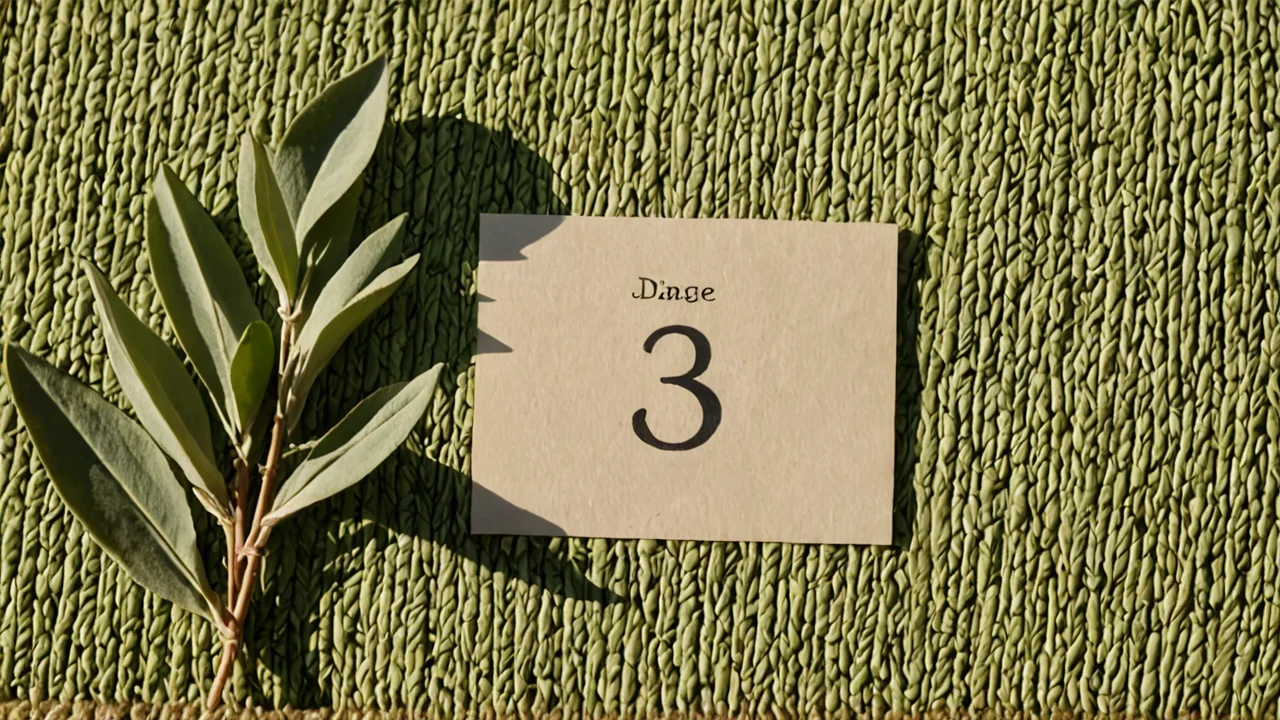
“What does it mean when I keep seeing three three three?” The tradition holds that encountering 333 signals powerful divine support, emphasizing creative expansion, spiritual alignment, and the encouragement to trust intuition while manifesting ideas into physical reality.
Three Three Three Meaning
When practitioners study the sequence of 333, it is generally interpreted as a confirmation from guiding sources—be they angels or spiritual mentors—that you are on a path of profound growth. The number three itself often represents synthesis, creativity, and the trinity (mind, body, spirit). Seeing this repeating pattern suggests that your thoughts, intentions, and actions are currently aligning powerfully, demanding that you trust your inner wisdom to guide the next steps.
The core message associated with 333 is one of empowerment. It encourages people to actively express their unique gifts and beliefs because the universal energy supporting them is strong. However, this message also carries a call for communication; it suggests that you need to articulate what you are feeling or realizing rather than keeping these insights internal, which is often where resistance or doubt can set in.
It must be understood within the context of modern numerological practice that angel numbers—defined as repeating number sequences such as 333—are a recent development. They were explicitly formulated in early 2000s popular numerology literature, meaning this specific interpretation is rooted in contemporary systems rather than being part of ancient doctrines.
The Frequency Of Sightings
A common question addressed by practitioners is, "Why do I keep seeing different angel numbers every day?" The general response within the field is that consistent sightings are perceived as an invitation for self-reflection and heightened spiritual awareness. Because modern angel number schemes draw on Pythagorean number mysticism, which treats numbers as fundamental qualitative principles of reality, these patterns can feel exceptionally noticeable when one opens their mind to them.
The persistence of seeing sequences like 333, or others, is often interpreted not as a magical coincidence but as a pattern recognition exercise for the individual. It suggests that your internal state (your thoughts, emotional landscape) is currently cycling through important themes, and the numbers are merely reflecting those cyclical lessons.
When someone asks "What are my angel numbers," the guidance offered by practitioners is usually to look not at a single number, but at the context of the sightings. Are you repeatedly seeing 333 when you are dealing with creative blocks? Are you more often seeing 111 when making decisions about independence? The trade-off here is that while the numbers provide structure, they require the individual to do the hard work of connecting the number's general meaning back to their personal lived experience.
Numerology Systems
To understand these recurring messages, it helps to know that numerology itself is the study of symbolic meanings ascribed to numbers in mystical traditions. It is important to note that while systems like Pythagorean number mysticism—associated with the 6th-century BCE school of Pythagoras—treated numbers as fundamental principles, modern Western numerology was systematized as a distinct practice much later. The word "numerology" appeared in English sources around 1907.
These contemporary angel number schemes are therefore considered extensions of these more modern numerological systems rather than direct links to ancient doctrines. This distinction is crucial because the methodology requires interpreting a number (like 3) and then linking that interpretation (creativity, expansion) to your current life situation—a highly subjective process.
The tradition also draws on other powerful symbolic frameworks. For instance, Gematria, which is a traditional Hebrew practice assigning numerical values to letters in sacred texts, demonstrates how deeply rooted the concept of number symbolism can be across different cultures and religious traditions, illustrating the breadth of source material available for interpretation.
Origins and Theory
When considering "where do angel numbers come from," it is vital to separate the modern practice from its historical roots. The framework of assigning profound, personal meaning to repeating digit patterns (such as 333) is a product of contemporary popular numerology literature, having been formulated in early 2000s times.
However, the general concept that numbers carry inherent symbolic weight is far older. This concept owes much to Pythagorean number mysticism and other global systems of number symbolism, including Babylonian or Hebrew traditions. The current practice requires a synthesis: taking an old belief (Pythagoras treating numbers as principles) and applying it through a modern lens (the repetition pattern). This mix means that contemporary practitioners must be clear about which theoretical system they are engaging with.
The theory does not claim any direct connection to ancient angelology. Instead, it utilizes the structure of number symbolism—a field that has built up over centuries in Greek, Hebrew, and other cultures—to interpret these modern repeating sequences as meaningful signs or messages.
Practical Application
While 333 is interpreted by many practitioners as a positive affirmation encouraging faith and communication, one must approach the subject with caution regarding its limits. It is essential to remember that numerology, in this context, is not meant to be taken as a physical claim about the world or as definitive guidance for major life decisions.
The tradition holds that while seeing 333 indicates supportive energy and creative alignment, it does not replace professional advice regarding emotional health, career planning, or any other area of practical life. The process is meant to be a spiritual mirror; if you feel resistance after receiving the message, it often suggests the personal conflict lies not with the number, but within the individual's acceptance of the energy the number represents.
Ultimately, whether one interprets angel numbers as real or simply helpful tools for introspection depends on their willingness to engage in the system. The best practice is viewing these sequences—whether 333 or another pattern—as prompts: moments when you are prompted to pause and reflect upon your immediate goals and current emotional state.
Reading 333 in Combination With Other Numbers
When 333 arrives next to a different sequence — 333 followed by 444, or a 111 sighting an hour before a 333 — most practitioners don't read the pair as one blended message. The working method is sequential: treat the first number as the setup and the second as the response or the check. In that scheme, 333 (held to concern expression, creativity, and the decision to speak or make something) followed by 444 (held to concern structure and steadiness) is read as "you've committed to the creative act; now the ground under it firms up." The reverse order reads as "the structure is already in place; the next move is to say the thing out loud."
What goes wrong here is sequence-hunting. Once a reader starts logging sightings, the temptation is to treat every adjacency as intentional and every gap as meaningful, and the readings start contradicting each other within a week. The practical fix is a hard rule: only pair numbers seen within the same short stretch of attention — the same drive, the same meeting, the same sitting — and let everything else stand alone. If you have to reconstruct the order from memory two days later, it isn't a pair.
Digit-summing is the other common move, and it's worth knowing where it comes from. Reducing 333 to 3+3+3 and reading the single 3 is a Pythagorean-style habit — treating digits as qualitative principles rather than quantities — filtered through modern numerology. It's internally consistent, but it collapses 333 into the same reading as a lone 3, which defeats the reason people notice 333 in the first place. Most practitioners who work with repeating sequences keep the repetition as the message and use the single digit only as a secondary gloss, not a replacement.
Where this gets expensive is time, not money. The journaling, the timestamp logs, the cross-referencing of pairs — it's all free and it can quietly eat the attention you meant to spend on the creative work the number is supposedly pointing at. If the tracking has become the practice, you've inverted it.
Setting Up a 333 Practice That Doesn't Collapse
Keep the record to one line per sighting and no more: the date, where you were, and the single word for what you were doing or feeling in that moment. Anything longer turns into a diary you'll abandon in a fortnight. The value is in the column of single words, because the pattern that emerges — three weeks of "stuck," "editing," "avoiding the call" — is the actual content, and it's visible at a glance in a way a page of prose never is.
Give the sighting a fixed response, chosen in advance, so the number doesn't arrive as a demand to improvise. A common one is to name out loud, in one sentence, the thing you've been not saying — to a person, a draft, a decision. Another is to write the next physical action for whatever project is stalled ("open the file," "send the two-line email," "book the room"). The point of a fixed response is that it turns the sighting into a small, repeatable act rather than a mood. Practitioners describe the practice as building momentum this way; the tradition frames the number as encouragement to move, and a predetermined move is the cheapest way to honor that without turning it into a ritual you have to sustain.
Set a review point rather than checking daily. Read the log at the end of a month and ask one question: does the cluster of single words point at one area of life, or is it scattered across everything? Scattered is the normal result, and it's the honest signal that the sightings are ambient pattern recognition rather than a message with a target. Clustered is the case where the reading has something to work with.
The failure mode to watch for is escalation. A reader starts with a one-line log, then adds a morning check-in, then a candle, then a specific time of day when 333 "must" appear — and within a few weeks a missed sighting reads as a withdrawal of support. That's the practice turning into a superstition with a schedule, and the tell is that you feel worse on the days you don't see it. If that happens, the correct move is to stop logging for a while and see whether the sightings thin out or persist. Either answer is useful; the dread is not.
One honest trade-off: this practice borrows its authority from much older number symbolism, but the specific 333 reading is a 21st-century formulation, so there's no inherited rulebook to consult when your case doesn't fit the standard gloss. You're working from a modern system with old scaffolding, which means the practitioner's judgment carries more weight than any source text. That's a feature if you like autonomy and a liability if you wanted a definitive answer.
What 333 Is Not, and How to Tell You've Overreached
Three three three is not a green light for a decision you've already made. The most common misuse is confirmation: someone is weighing a job offer, a move, a relationship conversation, and the number shows up — and it gets read as permission. Within the tradition the number is held to concern expression and alignment, not outcomes, and treating it as a verdict on a specific choice is a category error. The test is simple. Write down what you'd do if the number had never appeared. If the answer is the same, the sighting was decoration. If the answer changes, you've handed the decision to a pattern.
It is also not a health signal and not a financial one. No reading of 333 substitutes for a doctor's appointment, a second opinion, a budget, or a conversation with someone who knows your actual circumstances. Practitioners who take the tradition seriously tend to say this plainly, because the alternative — a person delaying a real decision while waiting for reassurance from a number — is the one outcome nobody in the field defends. The tradition's own framing supports this: the number is described as a prompt toward reflection and communication, and reflection that replaces action isn't reflection, it's avoidance with a spiritual veneer.
The overreach is usually visible in the language before it's visible in the behavior. Watch for sentences that start "the universe is telling me to" followed by something you'd been wanting to do anyway, or "333 means I shouldn't" followed by something you'd been dreading. Both are the number being recruited, not consulted. A cleaner habit is to state the reading as a question instead of a command — "if 333 is about expression, what am I not saying?" — which keeps the interpretation where it belongs, in your hands, and leaves the decision where it belongs too.
Finally, there's a version of this practice that costs nothing and a version that costs your attention. The free version is a one-line log, a fixed response, a monthly read. The expensive version is checking the clock, refreshing a feed for the next sighting, and letting a three-digit pattern set the temperature of your day. The tradition holds that the sequence is a sign of support; it does not hold that the sign is owed to you on schedule. Treating it as owed is the mistake, and it's the one that turns a useful prompt into a small, quiet source of anxiety.